
Can 3D Printing Make Transparent Parts?
Table of Contents
Can 3D printing make transparent parts? The honest answer: it can make translucent parts, and with the right process and post-processing, genuinely transparent ones — but "clear" is a spec, not a material. The transparency of a printed part is decided by three things: internal air gaps between layers, surface roughness, and the material's optical clarity. Every technology introduces one or more of these defects, and each has a workaround.
The best starting point is SLA/DLP resin printing: UV-cured acrylic resins print with the fewest internal defects, and with polishing or a clear coat, SLA parts reach light transmission close to that of cast acrylic (85-92% for the best resins). The workflow: print the part, remove supports carefully, sand through grits up to 2000+, polish with a plastic polish or flame, and optionally apply a clear UV-resistant coating. The result is a functional transparent part for lenses, light pipes, sight glasses and prototypes — but it is not optical-grade acrylic, and internal details are limited by the printing process.
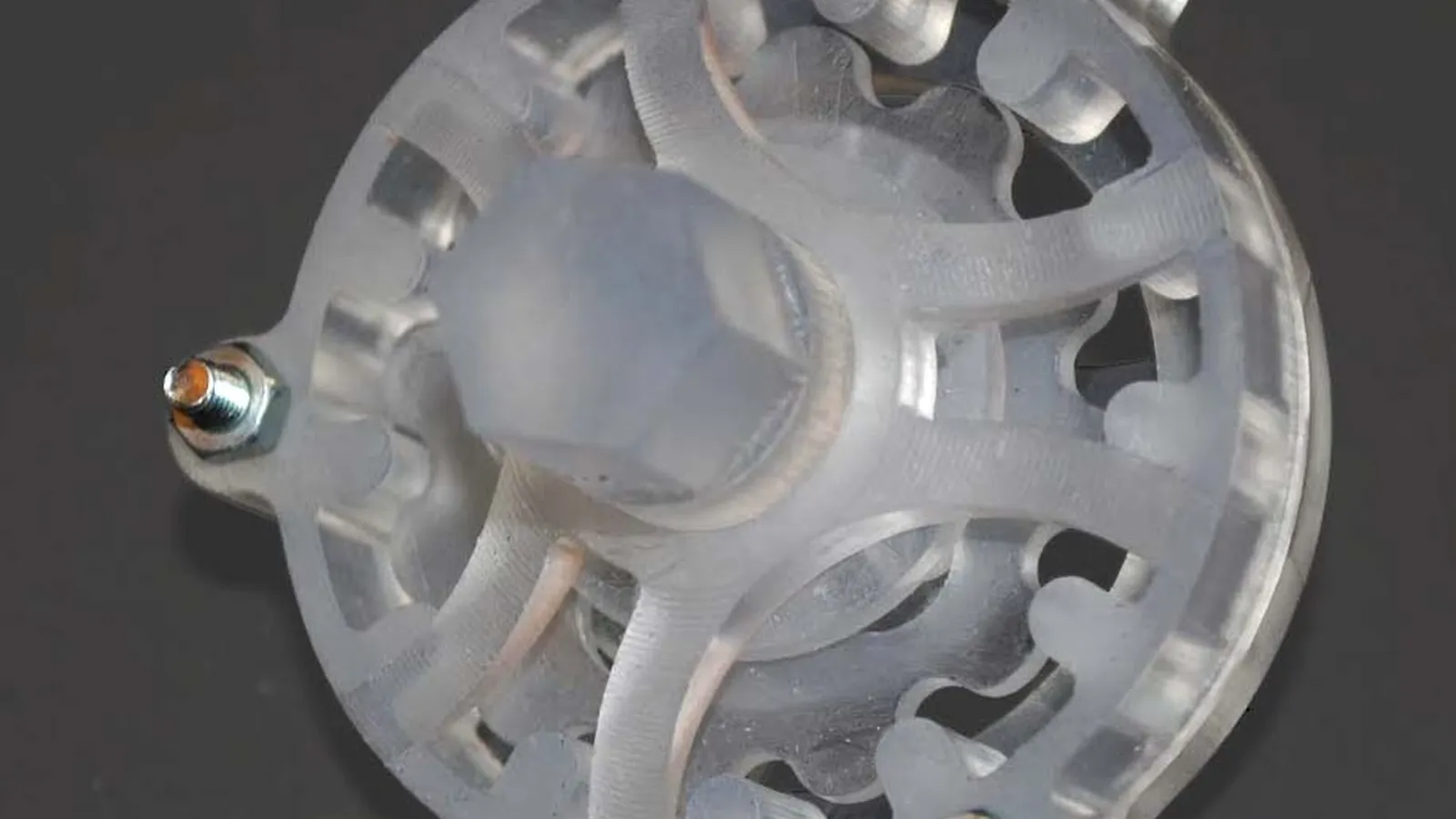
FDM and Powder Printing: Translucency, Not Transparency
FDM prints in clear PETG and clear polycarbonate, but the layer lines scatter light — the part comes out translucent, like frosted glass, and the transparency cannot be fully recovered because the defects are internal, not just surface. The best FDM results come from thin walls, small layer heights (0.1 mm or less), and vapor smoothing or epoxy coating, which fill the surface texture. A clear PETG FDM part is fine for a window or a light diffuser; it is not a lens. Powder printing (SLS/MJF) produces opaque white or gray parts — nylon is not optically clear in any practical sense, so powder printing is out for transparency.
The decision tree: optical quality → SLA/DLP with post-processing, or skip printing and use CNC-machined acrylic or polycarbonate; translucent window → clear PETG FDM or SLA without full polishing; light pipe and diffuser → any process with the right wall thickness and surface finish. For production quantities, the honest recommendation is usually molded or machined acrylic (PMMA) or polycarbonate — see our materials pages for the optical-grade options.
Clear Parts That Matter: The Practical Spec
When a transparent part matters — a medical window, a lens housing, a light guide — the spec should say what "clear" means: light transmission percentage, haze (ASTM D1003), or a visual reference sample. A printed prototype that proves the fit, then a molded production part in PMMA or PC that meets the optical spec, is the usual path — and our rapid prototyping plus injection molding combination covers both steps with the same engineering team.
Molded clear parts have their own rules: PMMA and PC need pre-drying below 0.02-0.05% moisture, high mold temperatures, and gate placement that avoids visible knit lines — the optics are decided by the process, not just the resin. For market reference, printing services offer transparent SLA parts with polishing as a standard finishing option (.
If your part needs to be genuinely clear, tell us the transmission or haze target and the volume. We will recommend the right process — printed prototype, machined optical part, or molded production — and quote it honestly. Contact us to start.
There is also the thickness factor: transparency drops with wall thickness in every printed process because the light path gets longer and internal defects accumulate. A 1 mm printed wall is noticeably clearer than a 5 mm wall of the same material. Design transparent printed parts thin, then add structure with ribs and bosses rather than thickening the window. If the application is optical — a lens, a display cover — the practical answer is almost always machined or molded optical-grade material, with the printed part used only to validate the mechanical fit before the optical part is made.
Need a quote? Contact us — upload your 3D file for a fast DFM review.
NEXT STEP
Ready to Start Your Project?
Send us your requirements — our team responds within 24 hours with pricing and lead time.
Written by
Ray ChanManufacturing Engineer · Custom Manufacturing Specialist. Ray helps global importers and integrators source factory-direct plastic parts and tooling.