
Future of 3D Printing: Materials & Industry 4.0
Table of Contents
The future of 3D printing is not about faster hobby printers — it is about industrial additive manufacturing claiming the jobs that machining and molding cannot do economically. The trajectory is visible in the machine park: production-grade systems for metal (LPBF, DED), engineering polymers (SLS, MJF, FDM), and multi-material parts, with software controlling not just the toolpath but the entire build-to-inspection pipeline. The question for a manufacturing buyer is no longer "is 3D printing production-ready?" but "which parts should be printed, and which still belong on a mold or a mill?"
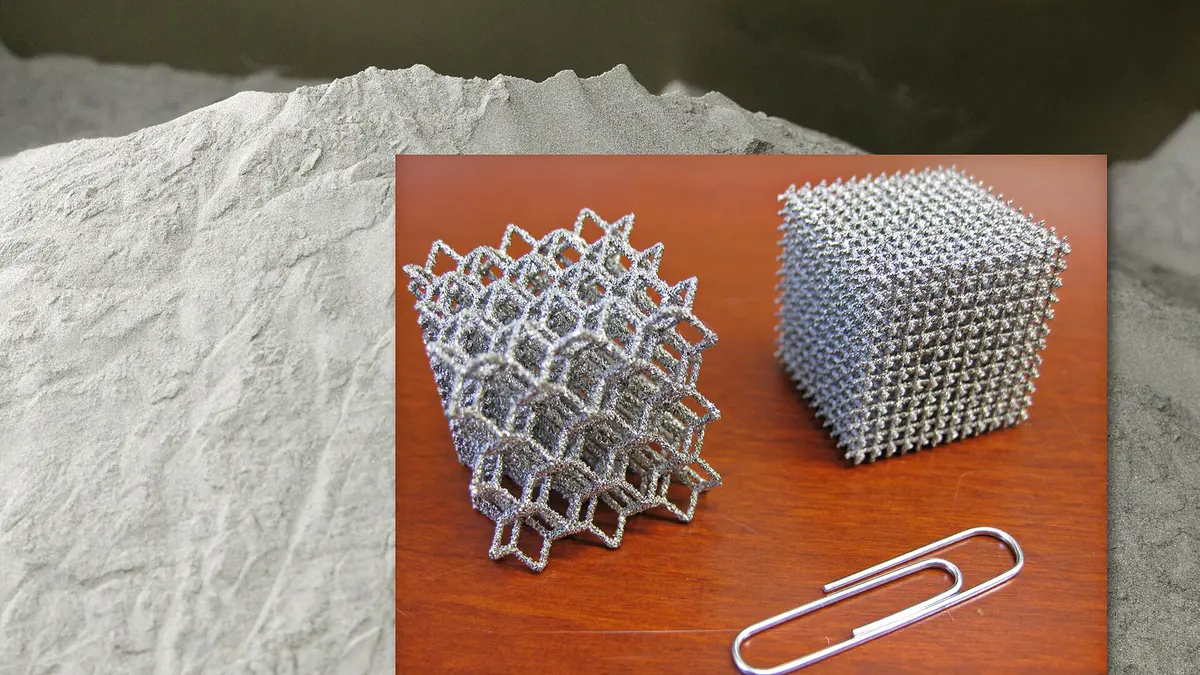
The honest answer, from a factory that runs molding, CNC and printing side by side: additive is winning where geometry is too complex for a mold (conformal cooling channels, lattice structures, patient-specific shapes), where volumes are too low to justify tooling, and where lead time is measured in days. It is losing — and will keep losing — where unit cost, material properties and surface finish decide the part, which is the domain of injection molding and CNC machining.
Materials and Machines to Watch
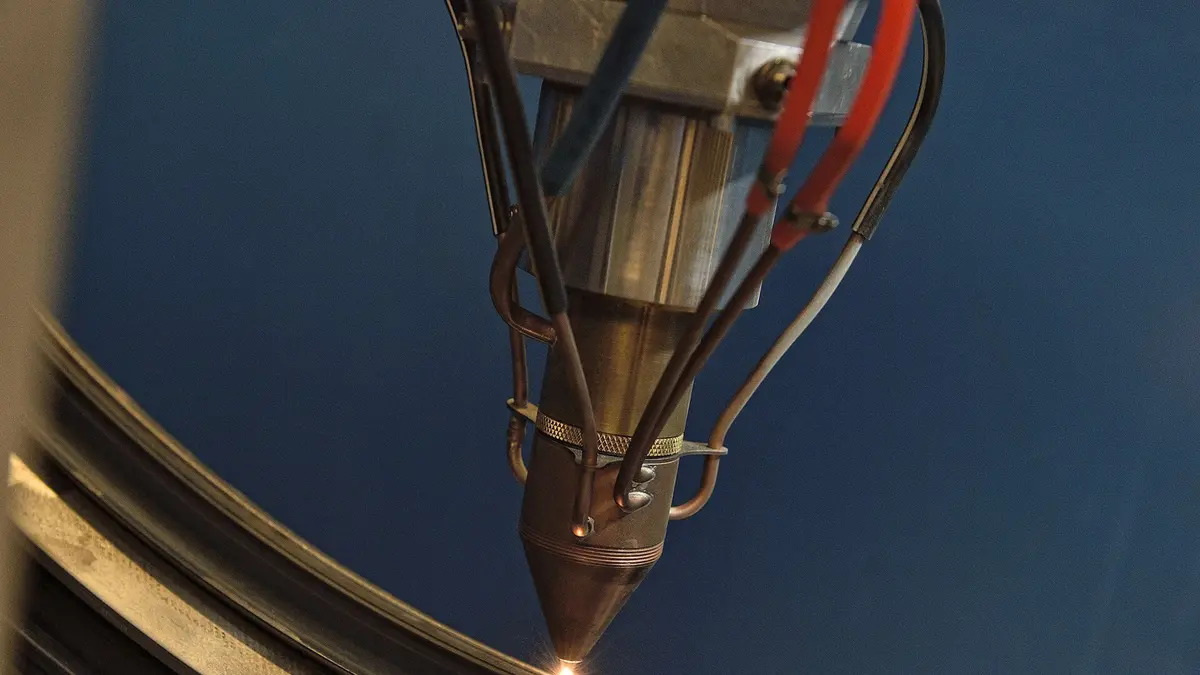
Metal printing has moved from research to production: LPBF (laser powder bed fusion) produces titanium, aluminum, stainless and Inconel parts for aerospace and medical, with build volumes up to 500 mm and layer thicknesses of 20-60 µm. The cost curve is still steep — powder, argon, post-processing (heat treatment, support removal, machining of critical faces) — so metal printing pays back on complex or low-volume parts, not on simple brackets that CNC makes in minutes. DED (directed energy deposition) is the repair and large-part version, adding material to existing components.
In polymers, the production-grade technologies are SLS and MJF for nylon parts (functional, durable, no supports needed), and industrial FDM for large tooling and jigs. The material palette keeps expanding: carbon-fiber-filled nylon, PEKK, PEEK, TPU and even printable ceramics. The comparison between SLS and MJF for nylon is covered in our MJF vs SLS article — the short version is that MJF wins on speed and isotropic properties, SLS wins on material options and supplier maturity.
Industry 4.0: Where Printing Fits the Factory
The bigger shift is workflow, not hardware. The factory of the next decade runs the same digital thread from CAD to inspection regardless of process: a part's file, its process parameters, its inspection data and its lot history live in one system, whether the part was molded, machined or printed. At MOLDITQUICK the practical version of this is that we quote your part across processes — rapid prototyping, CNC, molding — and let the volume and geometry decide, rather than pushing one technology. That is the honest "future of manufacturing": process selection by engineering, not by vendor.
The economics still favor molding at scale: a molded part costs cents at 100,000 pieces; a printed part costs dollars. The crossover is real and worth modeling per part, and the same is true versus CNC for metal. For reference, industrial 3D printing service benchmarks typically quote production-grade polymer parts in 5-10 days and metal parts in 7-15 days depending on post-processing (.
If you are evaluating 3D printing for a production part, send us the geometry and the volume. We will give you an honest process comparison — printed, machined or molded — with prices and timelines for all three. Contact us to start.
The honest caveat about the future: materials still cap the ceiling. Printed parts remain weaker and more anisotropic than molded or wrought equivalents, the surface finish needs post-processing, and the build rate is measured in hours where molding is measured in seconds. The technologies are improving quickly — faster lasers, bigger beds, better resins — but the crossover where printing replaces molding at volume has not arrived and will not arrive soon. What has arrived is the hybrid factory: print the complex geometry, machine the critical faces, mold the volume. That is the model we run, and the model we recommend to anyone planning a product.
Need a quote? Contact us — upload your 3D file for a fast DFM review.
NEXT STEP
Ready to Start Your Project?
Send us your requirements — our team responds within 24 hours with pricing and lead time.
Written by
Ray ChanManufacturing Engineer · Custom Manufacturing Specialist. Ray helps global importers and integrators source factory-direct plastic parts and tooling.