
MJF vs SLS: Key Differences for Nylon Parts
Table of Contents
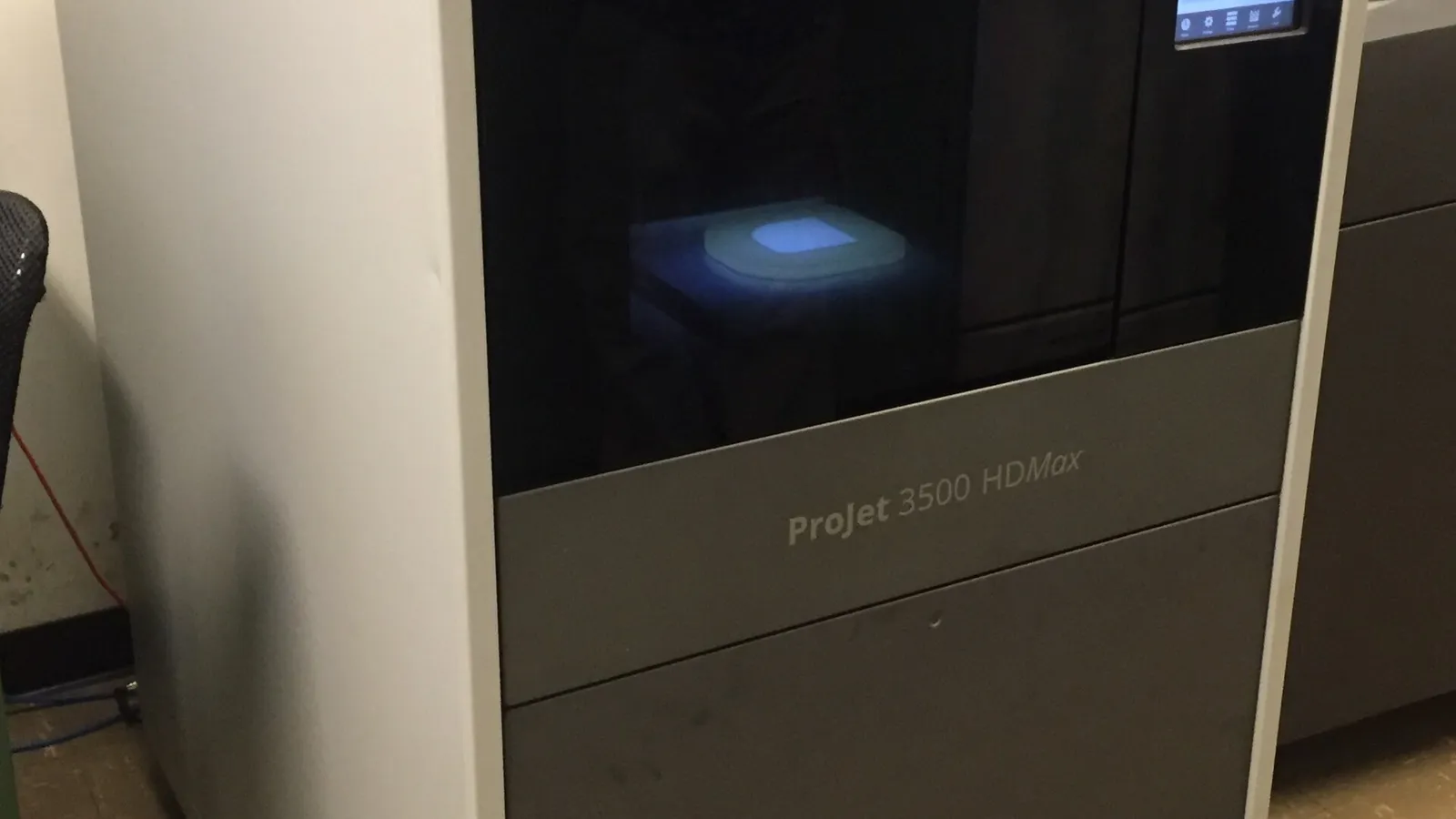
MJF vs SLS is the most common process decision in industrial nylon 3D printing, and the choice matters because the two technologies produce nylon parts with different mechanical properties, surface finishes and cost structures. MJF (Multi Jet Fusion, HP) builds parts by fusing nylon powder with an infrared-absorbing agent; SLS (selective laser sintering) fuses powder with a laser scanning each cross-section. Both produce functional, durable, support-free nylon parts — the differences are in the details.
For buyers comparing processes, the short summary: MJF parts are typically more isotropic (more uniform strength in all directions), faster to build in volume, and have a slightly grainy surface with a characteristic dark gray-to-black finish; SLS parts have a matte, sand-like surface, a wider material ecosystem (including glass-filled and flame-retardant grades), and more mature process documentation. Both are production-viable, and both are options we quote against rapid prototyping and injection molding for nylon parts.
Mechanical Properties: Isotropy and Strength
The key mechanical difference is isotropy. SLS parts have layered strength: the z-direction (build direction) is typically 20-40% weaker than the xy-plane because each layer bonds to the one below by thermal diffusion. MJF's fusing agent delivers heat more uniformly through the layer, producing more consistent inter-layer bonding — published comparisons show MJF parts achieving closer to isotropic tensile properties, with elongation at break typically higher than SLS in the z-direction. For parts loaded in multiple directions — hinges, clips, snap features — that matters.
In absolute numbers, both technologies produce nylon 12 parts with tensile strength around 40-50 MPa (unfilled), which is below molded nylon (60-70 MPa for unfilled PA12) — the gap that matters when a printed prototype stands in for a molded production part. Stiffness follows the same pattern. The engineering rule we apply in quoting: if the part will be molded later, validate the design in the printed material but design for the molded properties; if the part ships printed, design for the printed numbers — our 3D printing vs injection molding guide covers the property gap in detail.
Surface Finish, Cost and the Practical Choice
Surface finish: MJF parts have a finer-grained surface than SLS but show a slightly darker, more speckled appearance; SLS parts have a uniform matte, sand-like finish. Both can be media-blasted, dyed (SLS dyeing is well-established; MJF parts dye less evenly), or vapor-smoothed for a near-injection-molded look. For functional, non-cosmetic parts, either finish is fine; for consumer-visible parts, plan a finishing step.
Cost and speed: MJF builds parts in a full powder bed in one pass, so dense packing fills the build volume efficiently — for batches of mixed parts, MJF is often faster and cheaper per part. SLS has lower machine costs for small builds and a wider material range. Lead times from service providers for both are typically 5-10 days (; at MOLDITQUICK we route nylon prototyping through the process that fits the geometry and volume, and we produce the production version on our molding presses when volumes justify it.
If you are choosing between MJF and SLS for a nylon part — or deciding whether it should be molded instead — send us the part and the load case. We will quote the print options and the molded option side by side. Contact us to start.
The practical workflow difference also matters for lead time: MJF builds the entire powder bed in one pass, so a full build of mixed parts completes in roughly the same time as a single part — which makes MJF efficient for consolidated batches of multiple components. SLS scanning time scales with the geometry, so small simple parts in SLS are slower per unit in a mixed build. If your program involves multiple parts of varying size (a bracket, a cover, a clip in one batch), MJF is often the faster and cheaper route; if you need a specific material grade or flame-retardant properties, SLS's wider material ecosystem may decide the choice for you.
Need a quote? Contact us — upload your 3D file for a fast DFM review.
NEXT STEP
Ready to Start Your Project?
Send us your requirements — our team responds within 24 hours with pricing and lead time.
Written by
Ray ChanManufacturing Engineer · Custom Manufacturing Specialist. Ray helps global importers and integrators source factory-direct plastic parts and tooling.