
Two-Shot Molding Supplier: Multi-Material in One Cycle
Table of Contents
A two-shot molding supplier fuses two materials in one machine cycle: a hard substrate and a soft TPE layer, or two colors of the same resin, molded sequentially in the same tool so the second shot bonds to the first without any manual assembly. The result is a part with integrated sealing, grip or visual contrast — and no adhesive joint that can fail in the field.
Two-shot (2K) molding is a core capability at MOLDITQUICK. We run dedicated two-shot tooling on our presses and support the full design loop: material pairing, substrate geometry, bond-line placement and secondary operations like plating or painting. The program documentation runs under IATF 16949 / ISO 9001, and we can deliver 2K parts for automotive, medical and consumer applications with full traceability.
Design Rules That Decide Bond Strength
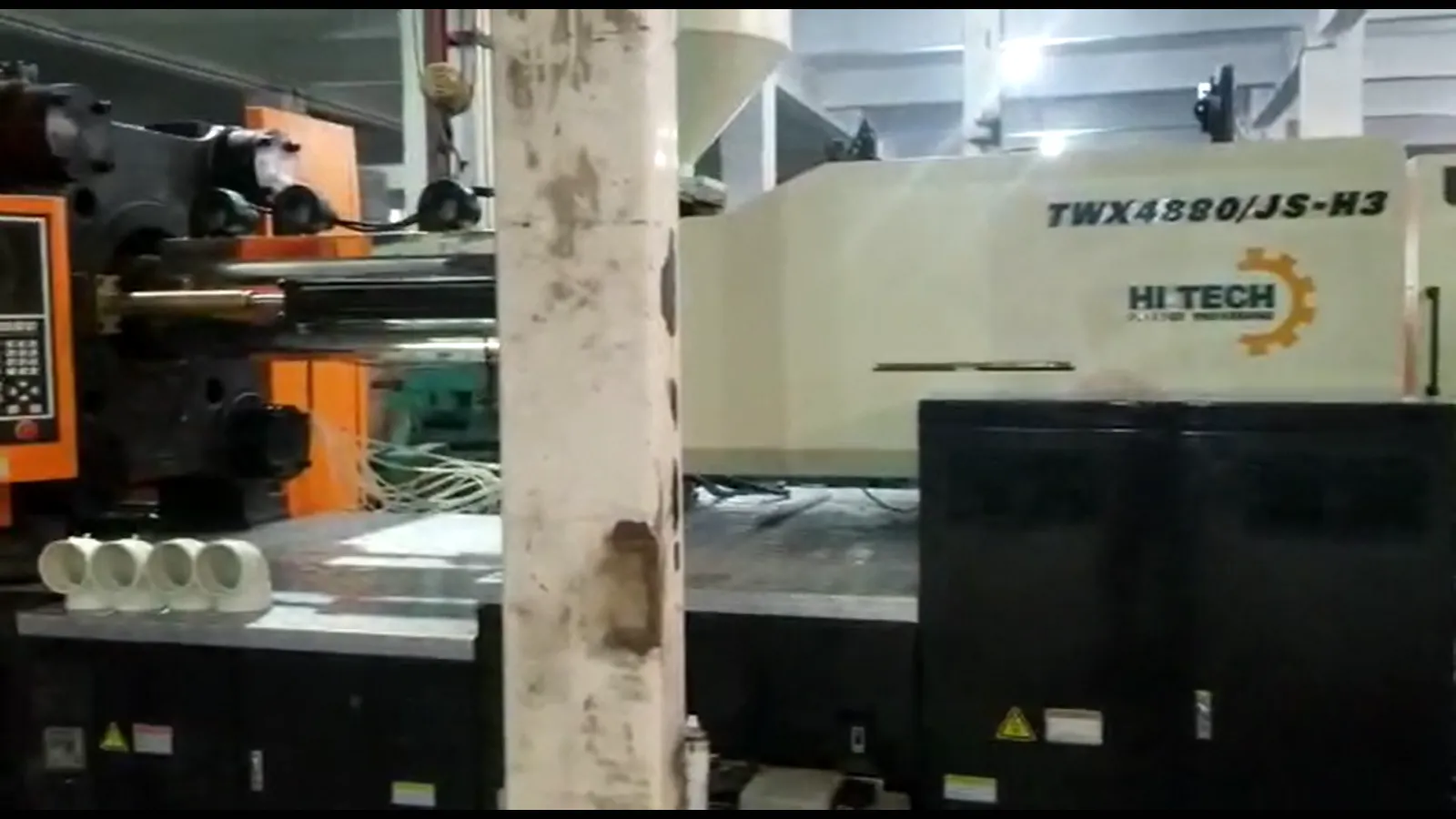
The bond between the first and second shot is mechanical, chemical or both. Thermoplastic vulcanizates and TPUs bond well to polypropylene and ABS when the substrate surface stays above the TPE melt temperature during the second shot; incompatible pairs like TPE on nylon rely purely on mechanical interlock, which means the design needs undercuts, through-holes or ribs that the TPE can wrap around. Our DFM review checks three things on every 2K part: the pairing temperature window, the interlock geometry, and the second-shot flow path — because a TPE that cannot fill its cavity at 190°C will knit poorly and peel in the field.
Tooling for two-shot molding is more expensive than a single-shot tool — two injection units, a rotating or sliding core, and careful gate placement for both shots. The payoff is that you eliminate the assembly station and the adhesive. On automotive door handles, two-shot tools hold parts tolerance of ±0.1 mm and mold tolerance of ±0.05 mm, with rejection rates held below 0.8% on mature programs.
Where Two-Shot Beats Overmolding and Assembly
Two-shot is the right answer when the bond area is large, the volumes are high, and the alignment between the two shots matters — seals, grips, keypads, dust covers. Overmolding a separately molded substrate in a second tool is better when volumes are low or when the two parts come from different material families that cannot be co-molded. We do both, and our two-shot vs overmolding guide walks through the decision with cost and tooling comparisons.
At MOLDITQUICK, 2K programs start with a mold-flow analysis of both shots, then move into tooling built through our audited tooling partners — a 3-5 day iteration on gate placement is routine because tooling and process engineering work as one team. The molding runs on our presses with closed-loop process control, and every lot ships with dimensional and cosmetic inspection reports. Prototype quantities arrive in 7-12 days, production runs in 25-30 days, from our 10,000 m² facility with 280 employees.
If your part needs a hard-soft interface — a seal, a grip, a soft-touch surface — send us the design and we will tell you whether two-shot is the right process, and what the tooling and part costs actually look like. Contact us for a DFM review.
Tooling cost is the honest caveat in two-shot molding: the tool is a two-station system — either a rotating platen or a sliding core — and it costs roughly 60-80% more than a single-shot tool for the same part. The offset comes from the assembly you eliminate: no second tool, no adhesive, no manual joining station, and no tolerance stack between two separately molded halves. For high-volume programs the math is strongly favorable; for low volumes, overmolding a separately molded substrate may be the cheaper path. We quote both routes so the tooling decision is made on your volume and your bond requirements, not on our preference.
Need a quote? Contact us — upload your 3D file for a fast DFM review.
NEXT STEP
Ready to Start Your Project?
Send us your requirements — our team responds within 24 hours with pricing and lead time.
Written by
Ray ChanManufacturing Engineer · Custom Manufacturing Specialist. Ray helps global importers and integrators source factory-direct plastic parts and tooling.