
What is Laser Cutting? Sheet Metal & More
Table of Contents
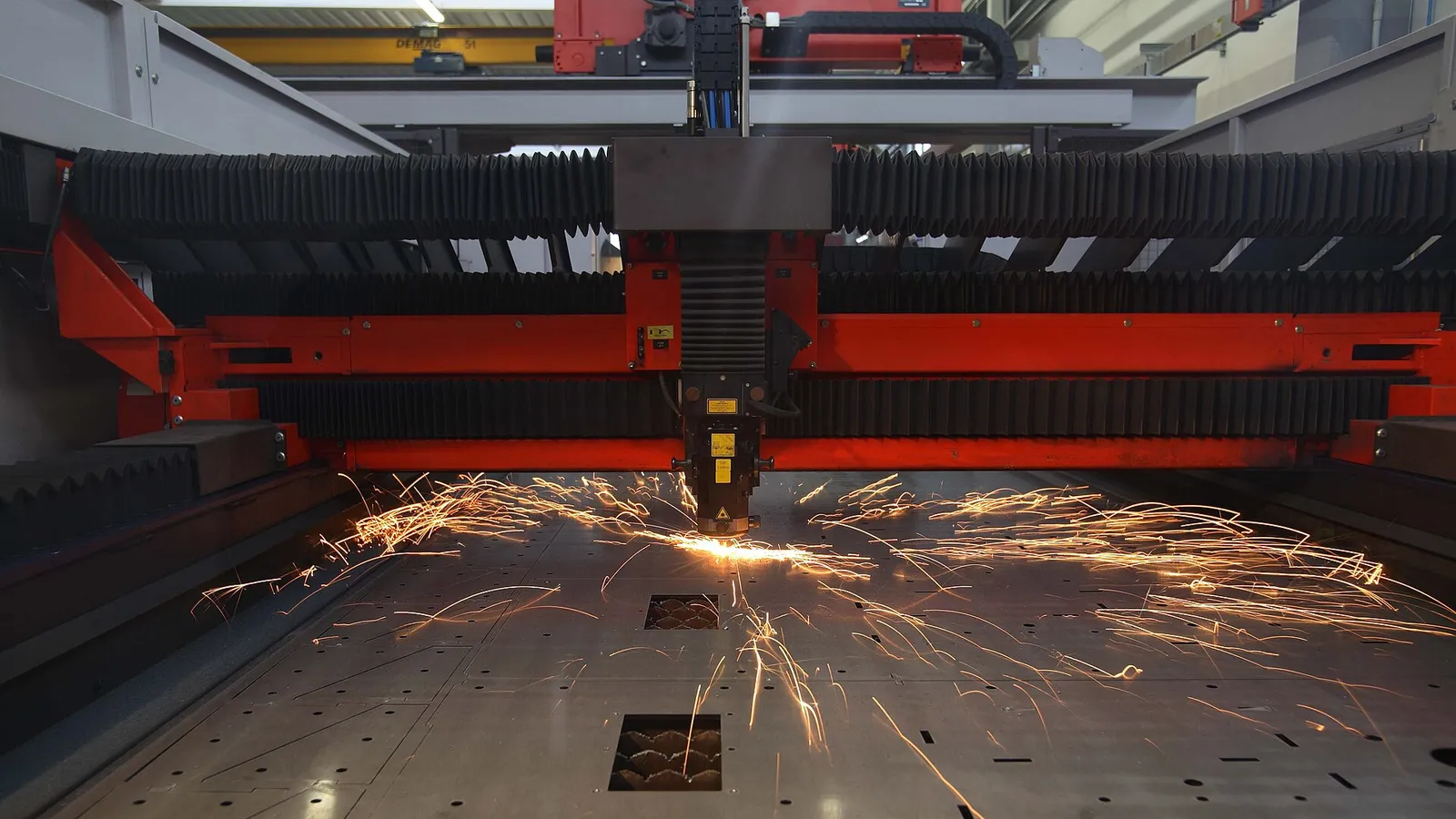
Laser cutting is the process of cutting sheet metal (and other materials) with a focused, high-power laser beam. The beam melts, burns or vaporizes the material along a programmed path, producing a clean edge with minimal heat-affected zone — and because there is no physical tool, every cut is a new shape at no extra tooling cost. It is the fastest and cheapest way to make flat metal parts, from prototype brackets to production runs of thousands.
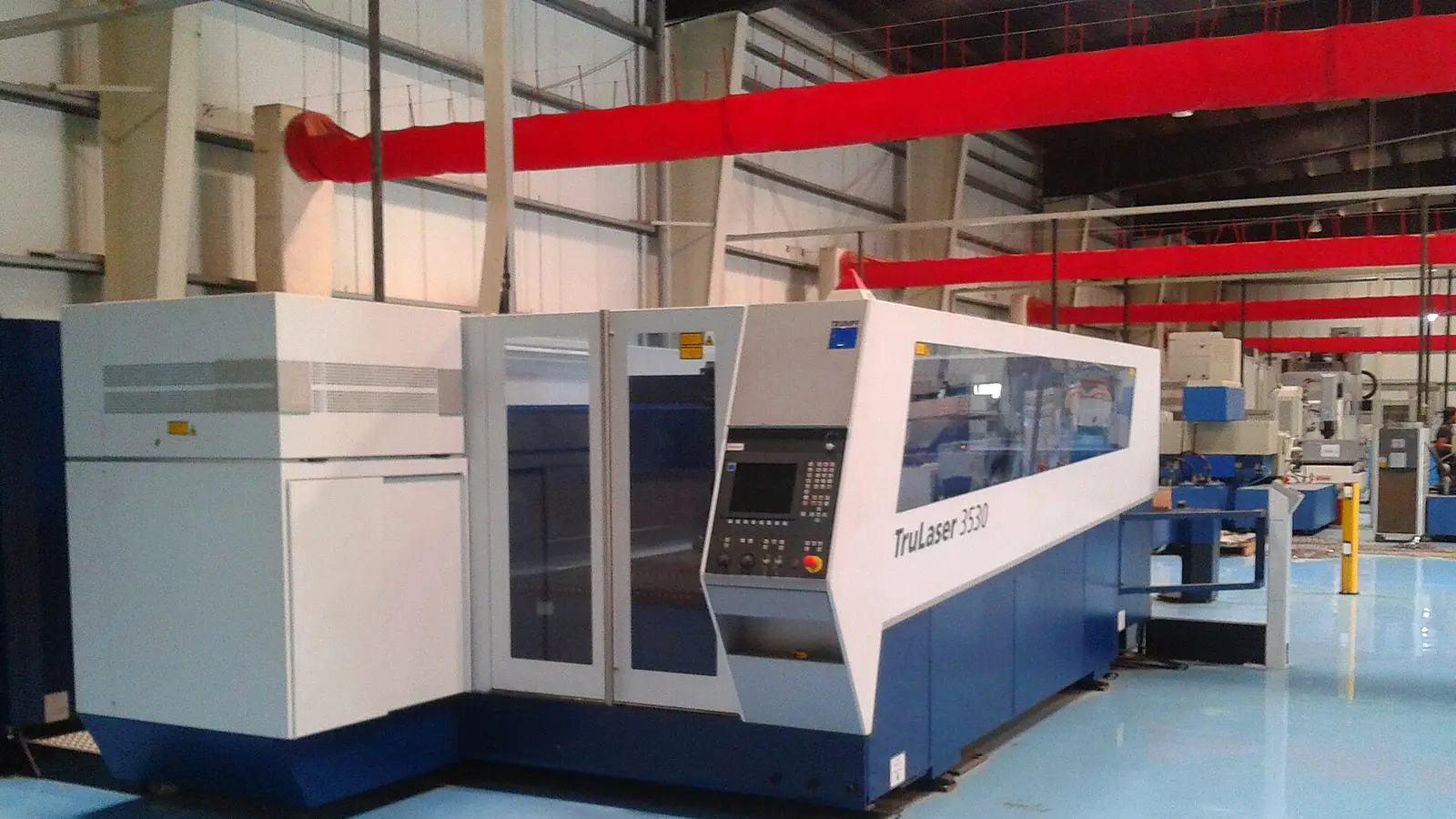
Modern fiber lasers dominate the industrial market: 1-12 kW machines cutting steel up to 25 mm thick, aluminum up to 15 mm, and stainless, brass, copper and titanium. The process is CNC-controlled, so accuracy is typically ±0.1 mm or better on the cut profile, with edge quality that depends on material, thickness and gas assist (nitrogen for clean stainless edges, oxygen for faster carbon-steel cutting).
Laser Cutting vs CNC Machining vs Waterjet
Laser cutting wins on flat parts: the fastest per-part time, the lowest cost for thin materials, and zero tooling. It produces a slight taper on the edge (a few tenths of a degree — usually invisible for parts under 10 mm) and a thin heat-affected zone (HAZ) that matters for hardened or coated materials. CNC machining wins when the part needs features the laser cannot make: holes with tight positional tolerances are fine on the laser, but counterbores, threads, pockets and 3D geometry need a mill. Waterjet adds the ability to cut very thick materials (100 mm+) with no heat at all, at the cost of slower speed and rougher edges — the choice for hardened tool steel and thick plates.
The decision rule: flat, 2D parts in sheet metal → laser; 2.5D and 3D features, threads, tight fits → CNC; thick plates or heat-sensitive materials → waterjet. For production, laser-cut parts often go to finishing (deburring, powder coating, plating) and then to forming (bending) — a chain we run on our floor for enclosure and bracket programs.
Laser cutting is usually the first operation in a sheet-metal chain — when the part is a high-strength steel structural panel, the forming step is hot stamping, not bending.
Cost Drivers and Tolerances to Expect
Laser cutting cost is driven by material thickness, cutting time (which scales with perimeter length and thickness), material type (copper and brass cut slower than steel), and batch size — setup is trivial, so the price is almost purely per-part cutting time plus material. Tolerances: profile accuracy of ±0.1 mm is standard on modern fiber lasers; hole diameters down to about 0.5× material thickness are achievable, and smaller holes are better drilled or machined. Edge quality is specified by ISO 9013 ranges — the standard classification for laser-cut edge quality — which buyers should reference in the drawing.
For a market reference, full-service fabrication shops quote laser-cut parts from CAD upload with delivery in 3-7 days for typical volumes (. At MOLDITQUICK, laser-cut and CNC-machined sheet-metal parts ship as part of the same programs that include molding and finishing — one quote for the whole enclosure.
If your part is a flat metal shape — a bracket, a cover, a chassis panel — send us the DXF or STEP and the quantity. We will quote laser cutting and, where needed, the bending and finishing to complete the part. Contact us to start.
The production workflow around laser cutting matters as much as the cut itself: laser-cut parts arrive with a dross-free but sharp edge and a thin heat-affected zone, and they typically need deburring, then forming (bending) if the design includes flanges, then surface finishing. The chain — cutting, bending, welding, finishing — is where enclosures and brackets actually come from, and the suppliers who quote only the cut are quoting a fraction of the part. A full-service fabrication partner quotes the finished part, with the bending allowances and the finish spec included, and the part arrives ready for assembly rather than ready for the next vendor.
Need a quote? Contact us — upload your 3D file for a fast DFM review.
NEXT STEP
Ready to Start Your Project?
Send us your requirements — our team responds within 24 hours with pricing and lead time.
Written by
Ray ChanManufacturing Engineer · Custom Manufacturing Specialist. Ray helps global importers and integrators source factory-direct plastic parts and tooling.